It’s called the aftermath because I had to deal with the feeling of being lost after Cusco. On the bus heading towards Puno, I felt something was missing and I wanted to head back immediately. In order to deal with my heart, my brain had to do some recon by planning my return to Peru and pushing back plans to head over to China on my next trip. Strike while the iron is hot, that’s what I was thinking. Back to Peru and study Spanish with homestay then spend time in the jungle as recommended by Junior, three to six months to see what Peru have in store for me.
Puno was my last stop with a tour to Lake Titicaca with Amantani homestay before crossing the border to Bolivia. The Andean Explorer bus tour from Cusco to Puno was good and it broke the long journey up into section where we stop at Raqchi archeological site and Pukara that is high up in the mountain then passing La Raya at altitude over 4,000m. A nice buffet lunch on the way and arrived in Puno early enough for me to walk around the town.


Lake Titicaca and the Amantani homestay was a good distraction, gave me something to focus on. It’s interesting to learn about the differences in cultures and languages, Quechua and Aymara, in a different region of Peru. The homestay provided an insight into the life of the families in the Amantani island and how tourism changed the way of life as well as the impact to the community and younger generations. I took this as an observational lesson, fulfilling one of the things I needed to do while on this trip.


After the tour it was another night in Puno then crossing over to Bolivia and stopping in Copacabana for a night before La Paz. My first impression of Bolivia is that it’s a huge construction site because the sites were everywhere at different stages of completion and some were completed but vacant. Copacabana for me was a rest place to collect myself, get my thoughts and attitude in the right place so that I’ll enjoy the rest of the trip.


La Paz was an eye opener and pretty amazing with the teleferico running as the main transportation with no traffic except for the human kind. I took one day to just ride the teleferico and it was a great way to see the city. The markets are one of the city’s wonders, spread over nearly 11 blocks and a place to observe the hierarchy of wealth and power among the indigenous people. El Alto is a place best visited with a guide or local with the more authentic witches’ market and the withes’ offices within five to ten minutes walk away. I grew up with stories of voodoos, witches and ghouls so the things that they have on display were of no surprise to me including baby alpacas, black skull made out of wax, varieties of herbs, tools and many more.


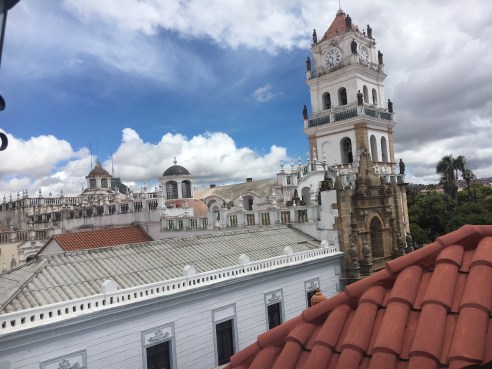
My time in La Paz was short and sweet, and it was time to roam Sucre, the constitutional capital of Bolivia. The history of the country is an interesting one coupled with the current political power, it’s on my list of to do for research. Sucre was a rather subdued place in comparison to La Paz, peaceful in some ways. I had a walking tour there too, learning more about the history of the place and the country. The cemetery was my favourite on the tour, gave an interesting perspective of the living and the dead.
I was happy to move on to Potosí after a couple of days and I decided to take some chill time to do some writing. The hostel was a perfect recommendation from the lovely Fannie, whom I met in La Paz. Didn’t do any excursion since I’m already signed up to Uyuni salt flat tour so it’s ‘me’ time before I join the group for three days. Cool, bohemian and chill vibe around the hostel settled my uneasiness since Cusco. It was nice to shut the outside world out to have a calm and collected environment to reflect and plan.


Uyuni is a simple town with just enough for a traveller like me to stock up and entertain myself for a day before the tour. There was a street market when I arrived, so a great start! Fruits and food are still pretty cheap in Bolivia and I’ve been told that once I’m in Chile, I’ll feel the pocket gets lighter quicker. Fruits and dinner in hand, I was ready to head back to the hotel for a night in and get ready for the tour.


The group for Uyuni Salt Flat Tour was filled with cool cats and the guide, Carlos, was an interesting character. The first day included a visit to the train cemetery then to the salt flat and island. It is one of the phenomenon that blows my mind, miles and miles of salty plains as far as the eyes can see (with sunglasses of course, it’s blinding without one) then islands, like an oasis in the midst of it with cacti grown on them. The photo opportunities were endless and here are some cool and funny ones we took.


Second day was to the lagoons, salty and rich with microorganisms that gave the flamingoes their reddish pink colour. We had a nice long stroll with the sexy llamas near San Augustine, when one of the car started acting up. One of my favourite stops was the Árbol de Piedra with amazingly formed rocks by the strong winds in that area. The rocks are so well formed that not attempting a climb was just not right, so I tried.


On both nights, the accommodations were very good despite Carlos’ warning that they are very basic. I was happy that we were completely cut off from the digital world, no WiFi and no data network. For the second night, there’s a hot spring nearby that a few of us decided to try out and it was amazing, having a dip accompanied by the stars.


The last day consisted of the last lagoon then splitting the group into two, those who were going back to Uyuni and those of us crossing the border to Chile. The tour was just what I needed as a jumpstart to look forward to the next part of the journey.
Next stop…Chile!!!
 Reflect-Action > Reflection
Leave a comment